

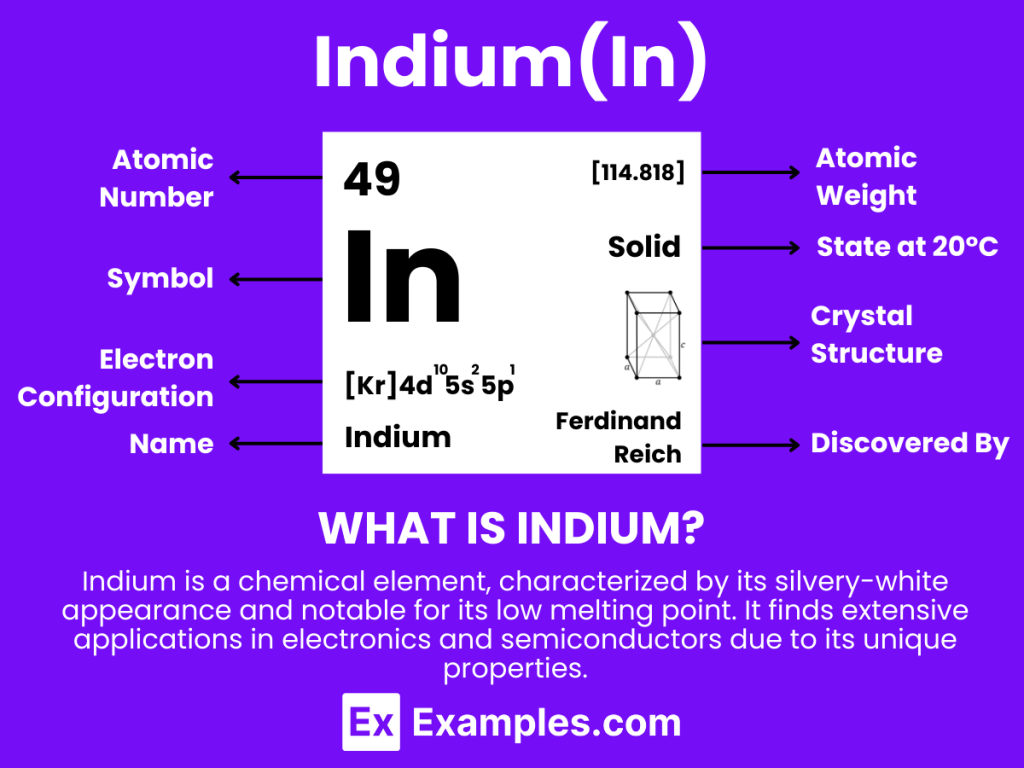
Indium is a critical mineral powering many of the devices and systems we rely on every day, but many people are still unaware of its importance, as well as the importance of indium recycling. If you’re reading this on a smartphone or monitor, there’s likely indium at work inside the touchscreen or display. This silvery metal is used in phone and tablet screens, flat-panel TV displays, fiber-optic communications, semiconductors, and even solar panels.
Indium’s unique properties—conductive and transparent when combined as indium tin oxide (ITO)—make it invaluable for touchscreens and LCDs. It also helps create high-efficiency solar cells and LED lights. In short, indium is an unsung hero of modern tech, quietly enabling our era’s gadgets and green energy solutions.
However, indium is not abundant.
In fact, according to the Royal Society of Chemistry, it’s one of Earth’s least prevalent minerals.
Unlike common metals such as copper or aluminum, indium doesn’t exist in large mineable deposits. Most of the world’s indium is actually extracted as a byproduct of zinc mining, which means the production of other metals inherently limits its supply.
With the boom in consumer electronics and renewable energy, demand for indium has been rising steadily, but the natural supply cannot easily scale up to meet this demand. Many governments have designated indium a strategic or critical mineral due to this imbalance between high-tech demand and limited supply.
Why Indium Recycling Matters
Recycling indium has become paramount for both economic and environmental reasons.
1. Supply
First, there’s simply not enough indium in known reserves to sustain unlimited mining. Global reserve estimates are modest, and production is concentrated in a few regions.
For example, China dominates primary indium production (historically providing well over half of global supply). This concentration creates supply risks. In early 2025, China even announced export restrictions on indium, sending shockwaves through industries that depend on the metal.
Such supply chain bottlenecks can lead to spiking prices and shortages, threatening manufacturing of electronics, solar panels, and defense technologies. Recycling offers a way to reduce reliance on mined indium and on single-source suppliers, strengthening the security of supply for many countries and companies.
2. Demand
Secondly, indium demand is soaring. The proliferation of digital devices means that more indium is being used than ever before.
Astonishingly, around 70% of the world’s indium production goes into the thin ITO coatings on LCD screens – the very screens in our TVs, laptops, and phones. As people upgrade devices frequently and new markets (like electric vehicles and smart appliances) expand, the indium in discarded electronics quickly adds up.
If we fail to recycle, we’re not only throwing away a finite resource but also missing an opportunity to recover a metal that already required energy and effort to extract in the first place.
3. Environmental Benefits
Environmental benefits are another major driver. Mining and refining indium from ore can be energy-intensive and polluting. By recycling indium from scrap, we reduce the need for new mining, cutting down on associated carbon emissions and habitat disruption.
Additionally, e-waste that contains indium (like end-of-life LCD panels) can pose environmental hazards if not handled properly. Recovering indium from these products keeps potentially hazardous materials out of landfills and incinerators.
It also prevents indium from literally being thrown away when it could be reused. In essence, recycling indium transforms what would be toxic or trash into a valuable feedstock for new products, exemplifying the principles of a circular economy.
4. Economic Incentives
Finally, there’s an economic incentive: indium is quite valuable. Although not as pricey as gold or platinum, high-purity indium can cost hundreds of dollars per kilogram.
The combined environmental and economic case makes a compelling argument: recycling indium isn’t just eco-friendly, it’s smart business.
From Scrap to Pure Metal: How Indium Recycling Works

How do we actually go about reclaiming indium from used products and industrial waste? Modern indium recycling is a sophisticated process that can transform scrap materials back into high-purity indium ready for reuse.
It typically involves several stages:
- Collection and Identification: The first step is gathering indium-bearing scrap. This could be anything from shredded electronics (like LCD screens and touch panels) to manufacturing scrap such as spent ITO sputtering targets, indium-rich sludges from plating processes, or alloy scraps.
- Pre-Processing and Separation: Once the indium-containing scrap is collected, it is pre-processed to isolate or concentrate the indium-bearing parts. For e-waste like LCD displays, this means dismantling the device to remove non-target materials.
- Extraction of Indium: This is the heart of the recycling process. The prepared scrap is treated to pull out the indium. Different methods exist, but most involve some form of hydrometallurgy (chemical leaching) or pyrometallurgy (high-temperature processing). In hydrometallurgical processes, for instance, the indium-tin oxide on LCD glass can be dissolved using acids or other solutions that leach indium into a liquid form.
- Purification: After extraction, the indium must be purified and converted back to a usable form. Through a series of purification steps – for example, solvent extraction, precipitation, or electrolysis – indium is separated from other metals and impurities present in the leach solution.
- Re-integration into the Supply Chain: The final step is to put the recycled indium back into circulation. Recyclers will typically sell the refined indium to electronics manufacturers, solder makers, or alloy producers that need it. In many cases, recycled indium is used in exactly the same applications as it came from.
Scrap Gators: Closing the Loop in the Indium Recycling Lifecycle

So, where does a company like Scrap Gators fit into this reinvented indium recycling landscape?
As a licensed secondary metal recycler, Scrap Gators leverages its industry connections and logistics expertise to gather scrap from various sources, including electronics waste and manufacturing discards.
We specialize in making recycling easy and profitable for our customers, which means we can identify valuable metals in what businesses might consider junk.
In the case of indium, Scrap Gators can work with companies in sectors like electronics manufacturing, aerospace, or solar panel installation to collect indium-containing scrap (such as defective touch panels, old equipment, or production off-cuts).
Rather than sending these materials to a landfill or sitting idle in storage, we ensure they enter the recycling stream.
Think of us as a bridge between waste generators and indium recyclers. We can sort and aggregate indium-rich scrap and then channel it to specialized recovery facilities.
By doing so, we help you unlock the hidden value in scrap.
Scrap Gators essentially converts a complex task into a simple transaction for our clients: we handle the heavy lifting of recycling logistics, and clients reap the benefits of sustainability and extra income.
Moreover, Scrap Gators’ commitment to the environment aligns with the broader goals of indium recycling. Every pound of indium-bearing scrap we divert from the waste stream contributes to the conservation of resources.
By partnering with innovative recyclers and using best practices in collection, Scrap Gators ensures that indium truly gets “reinvented” from scrap to strategic asset.
Conclusion: From E-Waste to Essential Resource
Indium might not be a household name, but its fate affects anyone who uses modern technology.
Reinventing indium recycling is about recognizing the strategic value in our scrap and having the foresight to recover it. What was once considered valueless waste – an old LCD monitor, a bucket of manufacturing dross – can now be transformed into a strategic asset that supports the next generation of technology.
In a world of limited resources and mounting electronic waste, indium recycling offers a hopeful path forward. It demonstrates how closing the loop on materials can benefit both the planet and the economy.
Manufacturers gain a stable supply of a critical material, recyclers and scrap handlers find profitable business, and we all benefit from the reduced environmental impact.
The story of indium recycling is still unfolding, but one thing is clear – by treating indium-containing scrap as a strategic resource, we are building a more sustainable and resilient future for technology.
Contact us today to learn about scrap removal and other services we offer.


