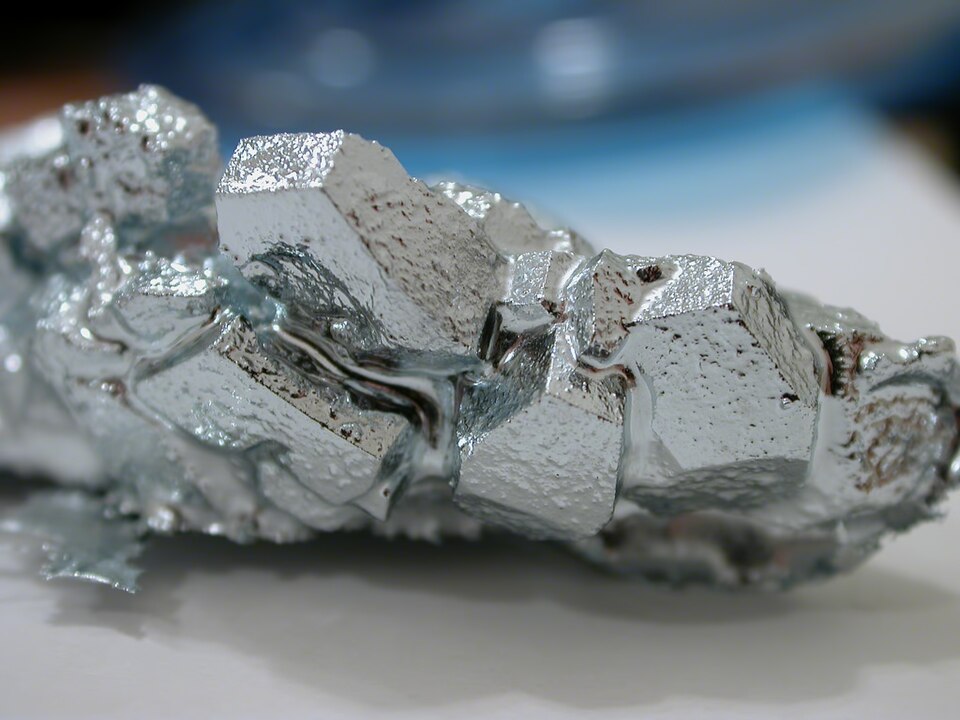
Your phone holds a metal that would melt in the palm of your hand. It’s called gallium, and while it often seems like a background player, it’s actually become one of the most watched materials in the electronics supply chain.
You’ll find gallium inside the chips that run 5G networks, LED lights, radar systems, EV chargers, and those small, cool-running phone chargers. Demand for these things is only growing, while supply comes almost entirely from one country.
But what happens to all that gallium when those devices wear out? The answer matters to manufacturers, IT managers, and anyone with a storage room full of old electronics.
Below, we’ll take a closer look at where gallium shows up, why supply is tight, and what you can do with gallium-bearing scrap today.
What Is Gallium?

Gallium is a soft, silvery metal that melts at about 29.8°C (85.6°F). Hold a piece in your hand, and it’ll start to turn liquid within minutes.
Nobody mines gallium on its own. Nearly all of it comes as a byproduct of aluminum production, pulled in small amounts from the liquid used to refine bauxite (with a smaller share coming from zinc refining).
That byproduct status shapes everything about its supply. Refiners only bother to recover gallium when the economics work, and for years China has been the one place where they consistently did.
Why Semiconductor Makers Rely on Gallium
Silicon still runs most chips. Gallium compounds step in where silicon struggles, mainly with high frequencies, high power, and light.
Gallium Arsenide (GaAs)

Gallium arsenide handles high-frequency signals better than silicon does. That’s why you’ll find it in:
- Smartphone radio amplifiers: the parts that boost the signal between your phone and the cell tower
- Satellite and radar systems: where signal speed and strength matter most
- Red LEDs and laser diodes: used in sensors, displays and fiber optic links
- Space-grade solar cells: which power most satellites in orbit
Gallium Nitride (GaN)
Gallium nitride handles higher voltages and temperatures with less wasted energy. You’ll see it in:
- Fast chargers: the compact phone and laptop chargers that stay cool
- 5G base stations: which need power-efficient amplifiers
- EV power systems: including onboard chargers and inverters
- Blue and white LEDs: the backbone of modern LED lighting
More devices switch to GaN chargers and power systems every year, so the amount of gallium in circulation keeps growing. Sooner or later, much of it will end up in scrap bins.
Other Uses
- Thin-film solar panels: CIGS panels use copper, indium, gallium, and selenium
- Permanent magnets: small additions of gallium improve some rare earth magnets used in motors
Why Gallium Supply Is a Concern Right Now

In 2025, consultancy Project Blue estimated that China accounted for 98.9% of primary gallium supply and 68.6% of germanium supply. That kind of concentration leaves buyers exposed, and the past few years have shown how quickly things can shift.
- August 2023: China began requiring export licenses for gallium and germanium.
- December 2024: China banned exports of both metals to the United States.
- November 2025: China suspended the U.S. ban until November 27, 2026, while keeping its licensing rules in place.
- January 2026: China added new export restrictions aimed at Japan.
Prices have followed. Market reports show gallium climbing more than 30% since the start of 2026, and the U.S. suspension is set to expire in a few weeks.
For North American companies, that uncertainty affects both planning and pricing. Defense contractors, telecom suppliers, and LED manufacturers all face the same question about where their next shipment will come from.
New supply outside China won’t arrive overnight. An alumina refinery has to add dedicated recovery equipment, and that takes years and serious investment. That puts a spotlight on a question the industry has mostly ignored: can we get gallium back out of the chips we’ve already made?
Where Gallium-Bearing Scrap Comes From
Gallium hides in more of your scrap than you might think. The most common sources include:
- Old smartphones and tablets: each one carries GaAs amplifier chips
- LED lighting: retrofits and upgrades send fixtures, panels and tubes out the door
- Telecom and networking gear: older base station equipment, radio units and routers
- Chargers and power adapters: newer GaN models are already showing up in e-waste
- Thin-film solar panels: CIGS panels that reach the end of their service life
- Manufacturing scrap: wafer offcuts, rejects, and residue from chip and LED production
What Happens When Gallium Chips Become Scrap?
Here’s the honest answer. Most of the gallium in discarded electronics is lost today.
A single phone or charger contains a tiny amount of gallium, often measured in milligrams or less. It’s bonded to other elements and spread across a circuit board packed with dozens of materials.
Most e-waste goes through shredding and smelting processes designed to recover copper, gold, silver, and palladium. Gallium usually ends up in slag or dust, where it’s too diluted to pull back out. The United Nations Environment Programme has reported end-of-life recycling rates for gallium below 1%.
Where Gallium Recycling Works Today
The bright spot is manufacturing scrap. Chip and wafer makers produce offcuts, sawing sludge, polishing residue and rejected wafers, and that material is rich in gallium and relatively clean.
Specialist refiners recover gallium from this “new scrap” at high rates and send it back to wafer producers. In fact, a large share of the gallium used outside China already comes from this closed loop.
The Challenge With End-of-Life Electronics

Old devices are a much harder source. A few things stand in the way:
- Low concentration: each device holds a very small amount
- Mixed materials: gallium is bonded with arsenic, nitrogen, indium, and other metals
- Safety concerns: arsenic in GaAs chips needs careful handling
- Process design: standard smelters are built around precious metals and copper
What’s Changing
Higher prices and supply worries have pushed researchers and recyclers to take a second look. Labs are testing chemical leaching methods that pull gallium from crushed LEDs, plus targeted disassembly that removes radio modules and LED chips before shredding.
Governments in North America and Europe have also put money toward recovery projects. None of this is mainstream yet, but the economics are moving in the right direction, and sorted scrap streams are the starting point for all of it.
Some experts call this urban mining, the idea that our old devices form a stockpile of metals waiting to be recovered. Gallium is one of the clearest examples of why that stockpile deserves attention.
Why Proper Recycling Still Matters
Even when gallium can’t be recovered today, sending old electronics to a qualified recycler pays off in several ways:
- Recovers valuable metals: gold, silver, copper, and palladium go back into use
- Keeps arsenic out of landfills: GaAs chips and LEDs get handled responsibly
- Builds future feedstock: well-sorted LED, telecom, and charger scrap becomes more valuable as recovery methods improve
- Protects your data: proper destruction keeps company and customer information safe
- Keeps you compliant: documented recycling supports environmental reporting and local regulations
Think of it as an investment in later recovery. Well-sorted scrap keeps options open as recovery technology catches up.
What Businesses Can Do With Gallium-Bearing Scrap

You don’t need a chemistry degree to get more value from your electronic scrap. A few simple habits go a long way:
- Separate LED lighting: keep LED fixtures, panels and bulbs apart from general e-waste
- Group telecom equipment: base station parts, radio units and networking gear belong together
- Save production scrap: if you make or assemble electronics, hold onto wafer offcuts, rejects and residue
- Keep chargers and power supplies together: newer GaN chargers make a cleaner stream when bundled
- Track what you have: a simple inventory of types and volumes helps your recycler price and route it
- Talk to your recycler early: a quick conversation before a cleanout can change how your material gets processed
How Scrap Gators Can Help
At Scrap Gators, we help businesses and individuals turn old electronics and metal scrap into value. We’ll help you sort your material, recover what can be recovered today, and send each stream to the right downstream processor.
Clearing out a server room? Upgrading lighting? Or maybe you’re handling production scrap. Whatever the scrap removal job, our team can walk you through your options. You’ll get straightforward answers and a rock-solid plan that keeps your materials out of the landfill.
Not sure whether your material contains gallium? Send us a quick description or a few photos, and we’ll help you figure out the best next step.
Final Thoughts
Gallium takes up a tiny amount of space in your devices, yet it plays a big role in how they work. With supply concentrated in one country and prices climbing, every gram that gets recovered matters more than it used to.
Most end-of-life gallium still slips through the cracks today. Good sorting and responsible recycling now set the stage for better recovery tomorrow.
Have a pile of old electronics, LED fixtures, or telecom gear? Contact Scrap Gators today and let’s figure out the best path for your scrap.